
Having a tooth extracted, whether it is a wisdom tooth or another tooth, is a significant dental procedure. At East El Paso Dentist, we want to ensure your recovery is as smooth and comfortable as possible. Now that your surgery is complete, your focus should be on resting and allowing your body to heal.
Following post-operative instructions carefully is the most important thing you can do to prevent complications and feel better faster. This guide will walk you through everything you need to know about at-home care after your tooth extraction.
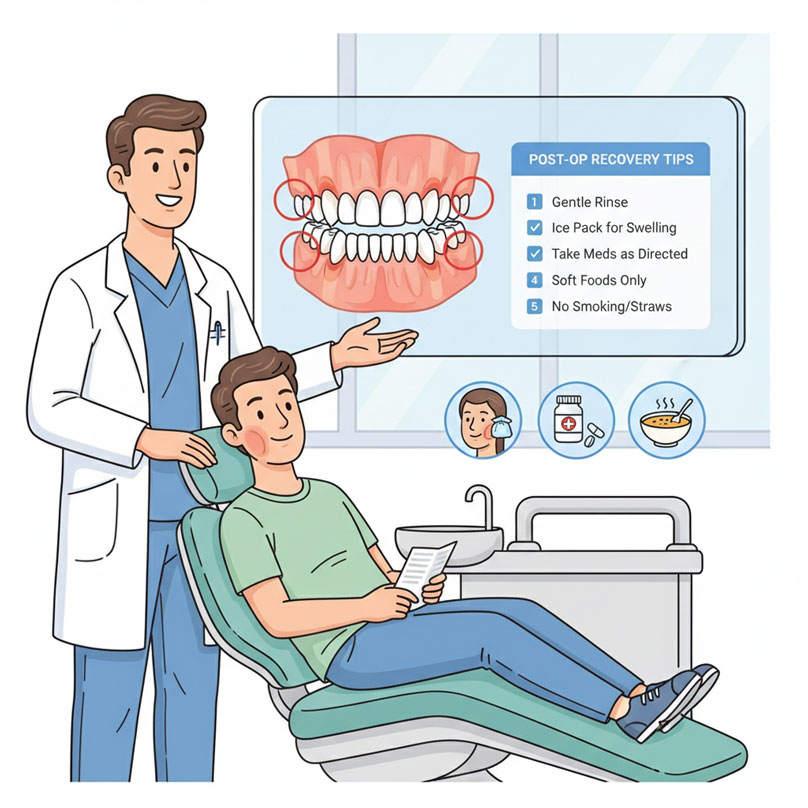
The First 24-48 Hours: The Most Critical Period
The first day or two after your surgery are crucial for healing. Your main goals are to control bleeding, manage swelling, and protect the blood clot that is forming in the extraction site. This clot is nature’s bandage and is essential for proper healing.
Operative Site Care
Your immediate priority is managing the extraction site.
- Bite on Gauze: You were sent home with gauze placed over the surgical area. Bite down with firm, consistent pressure for at least 30 minutes. This pressure helps stop the bleeding.
- Persistent Bleeding: If bleeding continues after 30 minutes, replace the gauze with a fresh piece and continue to apply pressure. It is better to apply consistent pressure for a long period than to change the gauze every few minutes.
- Normal Oozing: A small amount of bleeding or pinkish ooze from the site is normal for the first day or two. You may want to place an old towel over your pillow to protect it while you sleep.
Managing Swelling
Swelling is a normal part of the healing process and will likely peak within 48-72 hours after surgery.
- Use Ice Packs: On the day of your surgery, apply ice packs to the side of your face over the extraction area. Follow a cycle of 20 minutes on, then 20 minutes off. This will help reduce swelling and can also help numb the area.
Prohibited Activities: Protecting the Clot
To protect the delicate blood clot and prevent a painful condition called dry socket, there are several things you must avoid.
- No Smoking or Tobacco: DO NOT smoke or use smokeless tobacco for at least 48 hours after your procedure. The chemicals in tobacco interfere with healing, and the suction from smoking can dislodge the blood clot.
- No Alcohol: DO NOT consume alcohol for at least 48 hours. Alcohol can thin the blood, increase bleeding, and interact negatively with pain medication.
- No Spitting or Sucking: AVOID spitting, rinsing your mouth vigorously, swishing, or using a straw for at least 24 hours. These actions create suction that can easily pull the blood clot out of the socket.
Your Activity Level and Medications
Your body needs rest to heal. Pushing yourself too soon can delay recovery and cause complications.
Activity
- Rest Immediately: Go directly home after your surgery and plan to rest. Avoid taking stairs by yourself on the day of the procedure.
- Avoid Strenuous Activity: DO NOT engage in any sports, aerobics, or heavy lifting for at least three days. Increased heart rate can lead to more bleeding and swelling at the surgical site.
Medications
Follow your doctor’s instructions carefully when it comes to medication.
- Take as Directed: Take all medications exactly as prescribed. If you were given antibiotics, you must finish the entire course, even if you start to feel better.
- Pain Medication Caution: If you were prescribed pain medication, DO NOT drive or operate heavy machinery while taking it. These medications can cause drowsiness and impair your judgment.
- Mouth Rinse: If you were given a prescribed mouth rinse, begin using it as directed starting 24 hours after your surgery. Be gentle when rinsing.
Your Diet for the First Week
Eating the right foods will help you feel better and provide your body with the nutrients it needs to heal.
Soft Diet (First 24-48 Hours)
For the first couple of days, stick exclusively to a soft diet. Your jaw will be sore, and chewing will be difficult.
- Recommended Foods: Pastas, mashed potatoes, lukewarm soup, scrambled eggs, yogurt, pudding, milkshakes (without a straw), and seedless smoothies are all excellent choices.
Foods to Avoid
For the first week, you must avoid certain foods that can disrupt the healing site.
- Do Not Use Straws: Remember, no straws.
- Avoid Small or Sharp Foods: Steer clear of fruits with small seeds (like strawberries or raspberries), popcorn, chips, and nuts. These small particles can get lodged in the extraction site and cause infection.
- Avoid Irritants: Acidic foods like oranges and tomatoes, as well as carbonated drinks, can irritate the sensitive tissue.
Staying hydrated is also very important, so be sure to drink plenty of fluids, especially water.
When to Call East El Paso Dentist
While some discomfort is expected, certain symptoms require immediate attention. Please call our office right away if you experience any of the following:
- A fever with a temperature greater than 101.5°F.
- Pain that is increasing instead of decreasing or does not get better with your prescribed medications.
- Bleeding or swelling that is more significant than what you were told to expect.
Your recovery and comfort are our top priorities. Following these instructions will set you on the path to a quick and uneventful recovery. If you have any questions or concerns at any point during your healing process, do not hesitate to contact our office. We are here to help you.